When I got clean, this phrase was so confusing! I feel things all the time. Isn’t that the same thing?
I’ve learned that noticing a feeling and allowing myself to actually feel that feeling are very different. For me, feeling my feelings begins with noticing an emotion, but them I need to name that emotion, and then explore the emotion. To end this exercise, you can move into a solution or resolve the emotion in that moment.
Notice
Sometimes just identifying how I feel is difficult. We feel MANY things, but in this case we are talking about emotions. I might feel tense, not present, or jittery, but those aren’t emotions. I need to determine the emotion behind those feelings.
Name It
Introducing the feelings wheel!
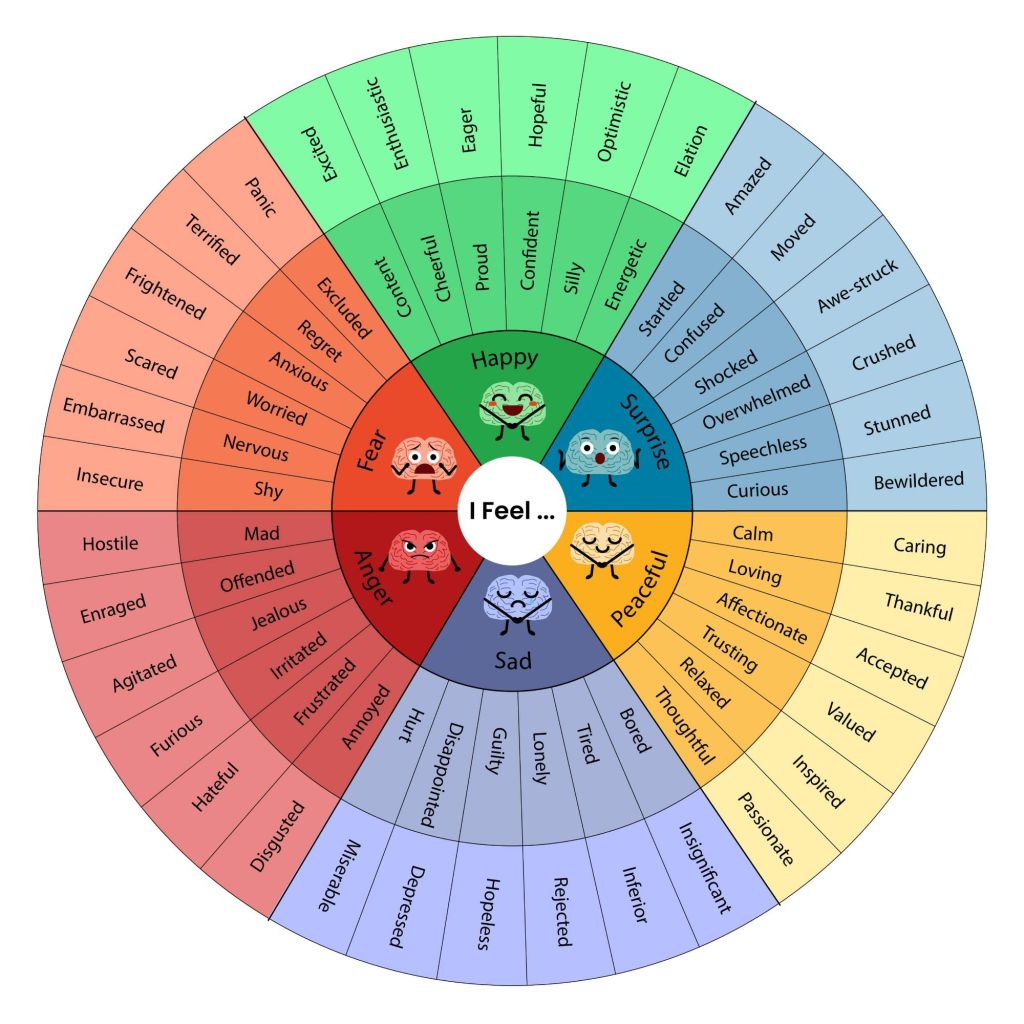
There are many different versions. The one above is very simplified. The idea is that you read through all the emotions and decide what feels right.You’ll usually pick more than one and note the main section of emotions they fall under. You can also work it in reverse. These two bits of info can help you uncover the source of the emotion.
So we’ve noticed the feeling, named it, now we explore it.
Explore It
It’s important to be gentle with yourself. Try not to overanalyze and not dig too deep, especially if you have PTSD. Also release the idea that you “should” feel a certain way. Emotions don’t have to make sense, not right away. Sometimes it’s weeks or months until I realize the source of an emotion.
We also want to “sit” with that emotion. When we were using, we used things outside ourselves to manage our emotions, often suppressing them. But that’s no different than scraping your knee and covering it with a bandage but not cleaning it. It will get infected; it will get worse.
To sit with your feelings, you need to be still for a moment and allow that emotion to emerge. It also helps if you’re alone. Just a few ways to sit with your emotions include:
- Crying
- Journaling
- Stomping/ screaming into a pillow
- Draw or paint what you’re feeling
- Notice where you feel the emotion in your body (tense shoulders, tight throat, upset stomach, etc.)
Finishing
This can be the most difficult part. We need to basically come back to reality and get back into the flow of life.
Sometimes it’s enough to feel that feeling and accept that it’s ok to feel this way and reassure yourself “this too shall pass.” Emotions come in waves. They don’t last forever, even though it might seem that way. Also, feelings aren’t facts. Just because I feel like I’m a failure, doesn’t mean I’m actually a failure.
Example
Notice: Let’s say you’re noticing you’re patience is thin and you’re being more harsh than you want to be, especially with those close to you.
Name It: You look at the emotions wheel and can easily identify angry, but what kind of anger? Perhaps agitated and hostile.
Explore It: Now why? Perhaps you’re finances are strained; you can’t cover your bills. It’s stressing you out. At this point you can uncover the core emotion.
Let’s say you choose to journal. You notice you’re just fed up with EVERYTHING. As you list what you’re angry about, you’ll uncover the true source of your anger. Perhaps you’re angry that you spent too much money on new clothes, or you’re fed up with your low income, and you’re scared of what will happen if you can’t pay your bills. Now you sit with that knowledge. You might cry and hit a pillow.
Pro tip: Anger isn’t actually a primary emotion. That means when we feel angry, there’s always something more going on.
Once you’ve felt all of this, you can more calmly look for solutions to your financial problems. Remember to encourage yourself. You are capable. You can do this!
Another important thing to remember is that you’re going to feel a certain way about a situation more than once. It’s important to revisit this exercise as often as you need. And that’s ok!
 Harmony Within: A Blog
Leave a comment